After completing the first section of the Cloud Digital Leader learning path, I felt pretty good.
A few weeks ago, terms like:
- Public Cloud
- Hybrid Cloud
- SaaS
- IaaS
- Shared Responsibility
all sounded intimidating.
Now they actually make sense.
I finally understood how companies use the cloud and why they’re moving away from traditional infrastructure.
So naturally, I thought:
“Okay, cloud foundations done. What’s next?”
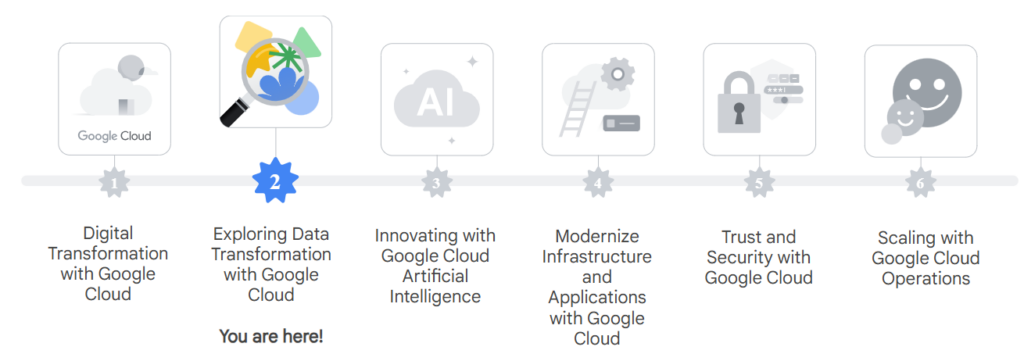
Then I opened the next course and immediately saw something interesting.
“Data is an organization’s most valuable asset.”
Honestly?
I wasn’t fully convinced.
Every company says data is important.
Every tech article says data is the future.
But if data is so valuable, why do so many organizations struggle to use it effectively?
That question stayed with me throughout today’s lesson.
The Realization That Changed My Perspective
At first, I thought data was just information stored somewhere.
A spreadsheet.
A database.
A report.
Nothing particularly exciting.
But the course made me think about something differently.
Data by itself isn’t valuable.
The decisions you make from it are.
Think about it.
A food delivery app collects thousands of pieces of information every day:
- What people order
- When they order
- Which restaurants they browse
- How long they spend looking at menus
- Which offers they click
Individually, these actions don’t seem important.
But together?
They tell a story.
And that’s where the value begins.
Most Companies Don’t Have a Data Problem
This was probably my biggest takeaway today.
Companies aren’t struggling because they don’t have data.
They’re struggling because they have too much of it.
Every click.
Every purchase.
Every customer interaction.
Every review.
Every support ticket.
The challenge isn’t collecting information anymore.
The challenge is turning information into something useful.
In cloud terms, this is often called closing the data-value gap.
I Also Learned That Not All Data Looks the Same
Before today, if someone asked me what data looked like, I would’ve probably imagined an Excel spreadsheet.
Rows.
Columns.
Tables.
Nice and organized.
But that’s only one type of data.
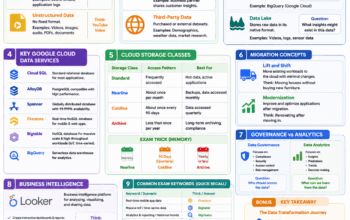
Structured Data
This is the neat stuff.
Spreadsheets.
Databases.
Sales reports.
Anything organized into rows and columns.
Semi-Structured Data
This surprised me.
Some data has structure, but not enough to fit perfectly into a table.
Things like:
- Application logs
- JSON files
- Email metadata
It’s organized, just not in the traditional spreadsheet sense.
Unstructured Data
This is where things get interesting.
Think about how much of your day involves:
- Photos
- Videos
- Voice notes
- Social media posts
- Customer reviews
Most of the world’s data falls into this category.
And it’s also one of the hardest types to analyze.
Which is exactly why AI has become so important.
The Data Around Us Is Everywhere
Another concept that clicked for me was understanding where companies get their data.
First-Party Data
This is data a company collects directly.
For a food delivery app, that could be:
- Orders
- Search history
- Customer preferences
This is usually the most valuable data because the company owns it.
Second-Party Data
This is someone else’s first-party data shared through a partnership.
Imagine a food delivery app partnering with a payment company.
Both organizations can learn from each other’s insights.
Third-Party Data
This comes from external sources.
Things like:
- Weather reports
- Population statistics
- Market research
At first, this sounded unrelated.
Then I thought about it.
If a food delivery company knows it’s going to rain tomorrow, they can predict higher demand and prepare accordingly.
Suddenly weather data becomes business data.
Why AI Keeps Appearing Everywhere
One thing I’ve noticed throughout this learning path is that AI keeps showing up in almost every conversation.
Today I finally understood why.
AI doesn’t create value on its own.
It needs data.
The better the data, the better the insights.
Without data, AI is just a very expensive calculator.
My Biggest Takeaway
When I started this lesson, I thought cloud computing was mainly about servers, storage, and infrastructure.
Now I’m starting to see the bigger picture.
The cloud is the foundation.
But data is what creates value.
Organizations aren’t collecting data because they enjoy storing information.
They’re collecting it because hidden inside that information are better decisions, better products, and better customer experiences.
And I have a feeling this is only the beginning of the data story.